
What is a Start-Stop System?
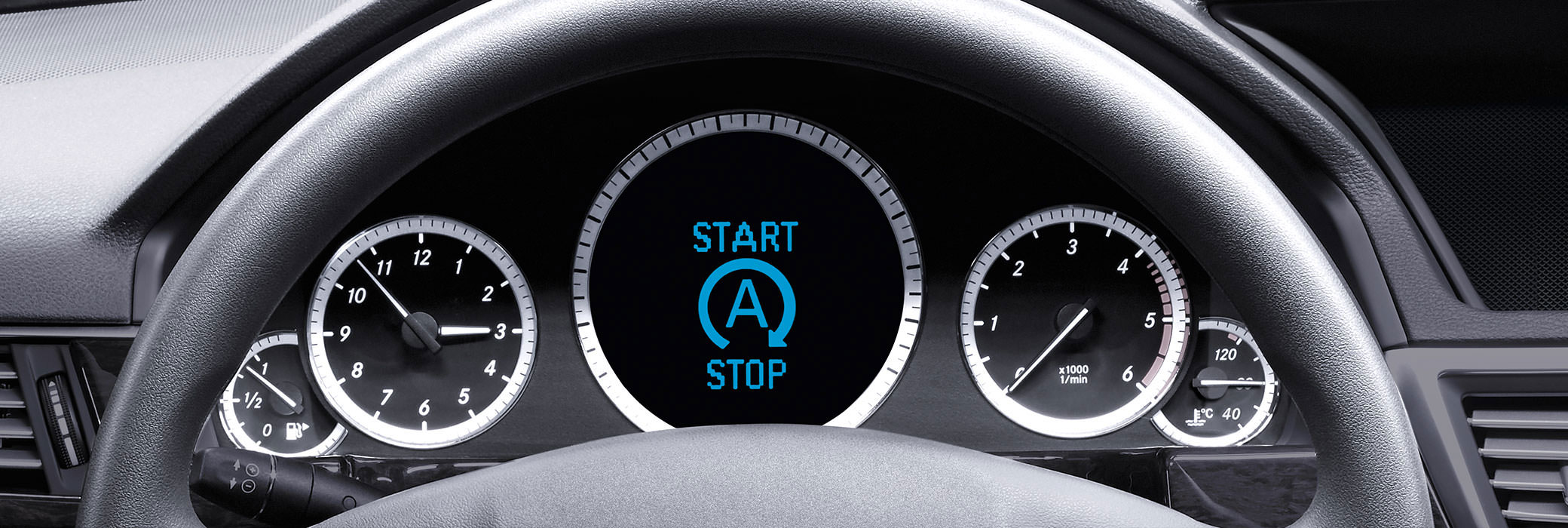
For the system to work reliably, it needs a high-performance battery that can handle frequent engine starts and continue powering the onboard electronics even when the engine is off. VARTA Dynamic EFB and VARTA Dynamic AGM are specifically designed to meet these demands. But how does Start-Stop work?
Basics: How a Start-Stop-System works
A start-stop system automatically detects when the vehicle comes to a standstill – for example, at a red light or in a traffic jam – and shuts off the engine at that moment. As soon as the driver wants to move off again, the engine restarts almost immediately. The entire process is automatic, controlled by sensors monitoring speed, battery status, and ambient temperature. This is how automatic start-stop works: its goal is to avoid unnecessary idling, save fuel, and reduce emissions, all without any action required from the driver.
What happens when a car with a start-stop system comes to a stop?
When the vehicle stops, the start-stop system automatically turns off the engine. This saves fuel and reduces noise while stationary. However, the system only activates if specific conditions are met – such as the correct temperature, sufficient battery charge, and full system readiness. Even with the engine off, all functions remain active and you shouldn’t experience any difference. Unlike traditional idling, the engine doesn’t burn fuel while waiting.
How does the start-stop system know when to restart the engine?
As soon as the driver wants to continue driving, sensors detect the intention to move, for example, by pressing the clutch or releasing the brake. The engine restarts within a split second. This process happens automatically and is almost imperceptible, with no delay or manual action needed.
What role does the battery play in a start-stop system?
Start-stop systems place high demands on the car battery. It must deliver power reliably, even during frequent engine starts and when the engine is off. Conventional batteries can’t handle this workload. That’s why robust EFB and AGM technologies are used. These start-stop batteries are specifically designed for frequent charge and discharge cycles and ensure consistent power supply to the vehicle’s electrical systems.
Why a Start-Stop-System makes sense
Whether in city traffic or during stop-and-go situations, modern start-stop systems make vehicle operation more efficient, more comfortable, quieter, and more environmentally friendly. The automatic shutdown relieves the engine during standstill, helps comply with legal emission regulations, and noticeably improves the driving experience in everyday life.
Benefits of start-stop systems: Fuel, emissions, everyday driving
Save fuel with start-stop systems is particularly efficient in urban driving with frequent stops. Depending on the driving profile, avoiding idling can reduce fuel consumption by up to 5-10%. At the same time, CO₂ emissions decrease, which benefits both the environment and your wallet. In everyday use, drivers also enjoy a quieter ride, especially when stopped at intersections.
Integration of start-stop systems into EU climate targets
Start-Stop-Technology plays a key role in helping automakers meet legal CO₂ limits. Manufacturers are required to significantly reduce the average fleet consumption, and start-stop systems make a measurable contribution. Even during vehicle type approval under WLTP, the technology provides clear advantages: start-stop reduces emissions. For many new vehicles, a start-stop system is not just useful, it’s essential.
Start-Stop-Systems: Comfort and noise reduction
An engine switched off at a red light not only reduces noise but also prevents unnecessary fuel consumption while idling. In urban environments, this makes the overall noise level noticeably more pleasant.
Additionally, the engine restart in modern stop-start systems is almost vibration-free. The system operates discreetly in the background – without compromising driving comfort.
Start-Stop-System & Start-Stop-Battery: what’s behind it
Behind the seemingly simple stop-and-go process lies a complex interaction of sensors, control units, and energy management. VARTA start-stop batteries play a crucial role in this system. They are not just a power source, but an integral part of the entire start-stop system.
Start-Stop System Logic: Sensors, Control, and Energy Flow
The start-stop system operates fully automatically and is controlled by a network of sensors and control units. The system continuously monitors key factors such as:
Based on this data, the control unit decides in real time whether the engine should be switched off or restarted. This smart regulation not only ensures greater efficiency but also provides a seamless driving experience – without requiring any driver intervention.
The Role of the Battery in Start-Stop Systems
At the core of the technology is the new role for car batteries (learn more) . Unlike in conventional vehicles, the battery must not only start the engine but also reliably power the electrical system and comfort features while the engine is off.
EFB-Batteries (Enhanced Flooded Battery) for basic start-stop-systems
AGM-Batteries (Absorbent Glass Mat) for vehicles with extensive equipment or regenerative braking
Thanks to intelligent control, the battery’s condition can be continuously monitored:
- Battery Energy Management system (BEM) manages and monitors the battery intelligently. It communicates with the vehicle’s electronics and ensures optimal battery performance in everyday use.
- The State of Charge (SOC) is monitored in real time to maintain starting ability and power supply to onboard consumers – even during short trips and frequent stops.
Start-Stop-System: Why conventional batteries fail
Many underestimate the demands of a start-stop system. A conventional flooded battery (SLI) is simply not designed for this level of strain. It cannot handle the frequent engine starts, partial charge states, and repeated cycling over time.
The consequences of the wrong battery can include early battery failure , malfunctions in the start-stop system and vehicle electronics, reduced driving comfort and in the worst case, a complete breakdown.
Only genuine start-stop car batteries are engineered for these extreme conditions and can reliably support the system in the long term. Understanding EFB and AGM differences is essential.
Common problems in Start-Stop-Systems and how to avoid them
Many underestimate the demands of a start-stop system. A conventional wet-cell battery (SLI) is simply not designed for this level of strain. It cannot handle the frequent engine starts, partial charge states, and repeated cycling over time.
The result of using the wrong battery can include early battery failure, malfunctions in the start-stop system and vehicle electronics, reduced driving comfort – and in the worst case, a complete breakdown.
Only genuine start-stop car batteries are engineered for these extreme conditions and can reliably support the system in the long term. But not all start-stop batteries are the same – understanding the difference between EFB and AGM technology is essential.
Why the Start-Stop-System fails to activate
The start-stop system constantly monitors a range of conditions. If even one is not met, the engine remains on and start-stop does not work (learn more) .
- The battery is not sufficiently charged (SOC too low)
- The engine has not yet reached optimal operating temperature
- The outside temperature is too high or too low
- The air conditioning or heating system is running at full capacity
- Brake pressure or clutch position is not ideal
- The windshield defroster is set to maximum power
These conditions are designed to protect system functionality – they are not faults.
Comfort and software in the Start-Stop-System
Modern vehicles often prioritize driver and passenger comfort. This means that even if all technical parameters are met, the start-stop system may be deactivated temporarily.
In some cases, a software update may be required. A diagnostic tool at a workshop can quickly identify and resolve these problems.
When a Workshop Visit & Battery Replacement Are Necessary
If the start-stop system fails permanently, the battery warning light comes on, or comfort features stop working, the cause is often a worn-out or incorrectly installed battery. Especially in vehicles with start-stop technology, special start-stop batteries are essential. Conventional car batteries are not built to handle these demands.
If you're planning a battery replacement by yourself, be sure to follow all requirements. In general, it’s strongly recommended to have the battery replacement performed by a professionally trained auto technician.
A workshop visit is advisable in the following situations:
- The battery is older than 4 years
- Frequent system failures despite optimal conditions
- Warning messages in the onboard computer
- Incorrect battery installation
Tip: During battery replacement, always ensure the right code of the BEM for battery replacement is used. In some vehicles, the new start-stop battery must be registered within the system to function properly.