
xEV – Batteries for electric vehicles: 12V Systems, AGM Technology & Solutions
Key Takeaways
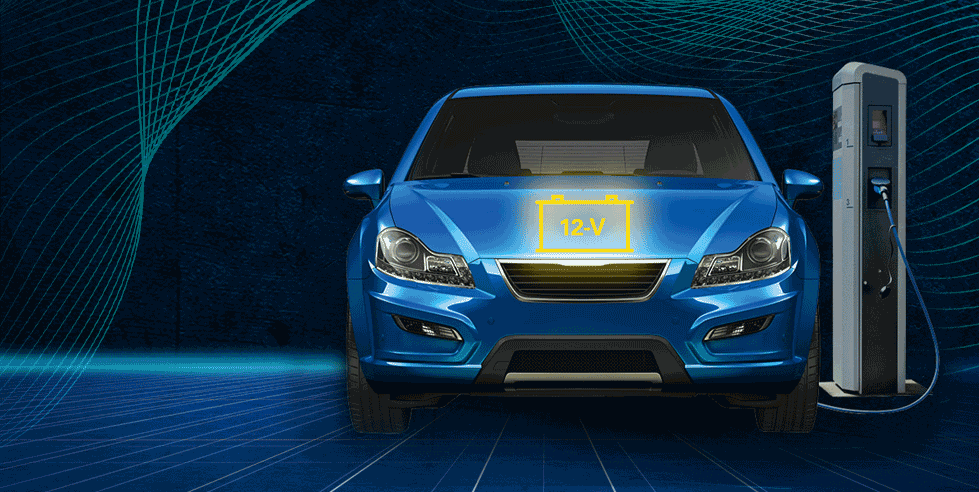
• Every electric vehicle still relies on a 12V battery system.
• xEVs combine high-voltage and low-voltage battery technologies.
• AGM batteries support safety-critical vehicle functions.
• The 12V battery powers ECUs (Engine Control Units), onboard electronics and startup processes.
• Charging habits and temperature strongly affect a car’s battery lifespan.
Content
01 – What is xEV Technology?
02 – How do electric car batteries work?
03 – AGM batteries for modern electric vehicles
04 – Why is the 12V battery important for electric vehicles?
05 – xEV battery maintenance: What affects your car’s battery longevity and performance?
What is xEV Technology?
xEV technology is a broad term used in the automotive industry to describe all types of hybrid cars and electrified vehicles, i.e. vehicles that use electricity either partially or fully for propulsion.
What does “xEV” stand for?
The “x” is a placeholder for different levels of electrification. So instead of naming just one type of vehicle, xEV groups several categories together.
What are the different types of hybrid cars and electric vehicles?
xEV Technology covers different types of electric cars such as full Hybrid Electric Vehicles (FHEV), Plug-in Hybrid Electric Vehicles (PHEV), Battery Electric Vehicles (BEV) and Fuel Cell Electric Vehicles (FCEV). And even though technology puts more advanced EVs on the road, all of them rely on a 12V battery.
Battery Electric Vehicle (BEV)
This type of electric car is powered only by a battery and does not use an internal combustion engine (ICE). They are charged via a plug, at a home charger, public charging point or, where permitted, a domestic socket. In everyday use, they drive without exhaust gases and typically offer a range of 200 – 600 km, depending on the model. Modern BEVs are often offered with different battery capacities (measured in kWh), which result in different driving ranges. For example, the same model series might be available with 40 kWh, 60 kWh, or 80 kWh batteries. They are best suited for daily driving when access to charging is available, but they require regular charging and depend on the charging network.
.png?sfvrsn=aa2fd975_1)
Hybrid Electric Vehicle (HEV)
Hybrid Electric Vehicles combine an internal combustion engine (ICE) with one or more electric motors. Unlike plug-in hybrids, HEVs cannot be charged from an external power source. Their traction battery is charged through regenerative braking and by the internal combustion engine. Depending on the hybrid system, the electric motor either supports the combustion engine or can power the vehicle independently for short distances. HEVs can reduce fuel consumption without requiring the driver to plug in the vehicle, although they still rely on fuel. Note: The actual electric-only range varies significantly depending on the model. Modern hybrid vehicles may offer more electric driving capability than earlier generations.
.png?sfvrsn=35412750_1)
Plug-in Hybrid Electric Vehicle (PHEV)
They also combine an internal combustion engine (ICE) with an electric motor, but they use a larger battery that can be charged via a plug. This allows for electric-only driving over distances of around 40–100 km. When the battery is empty, the vehicle continues running using the fuel engine, similar to an HEV. PHEVs are well suited for daily commuting on electricity with flexibility for longer trips, but they are more complex and require charging to fully benefit from their electric capabilities.
.png?sfvrsn=7aeeb2ee_1)
Comparison Overview
| Feature | BEV (Battery Electric Vehicle) | HEV (Hybrid Electric Vehicle) | PHEV (Plug-in Hybrid Vehicle) |
|---|---|---|---|
| Power source | Battery only | Gasoline + small battery | Gasoline + larger battery |
| Charging via plug | Yes | No | Yes |
| Fuel dependency | No | High | Medium |
| Electric-only driving | Yes (100%) | Very limited | Yes (medium range) |
| Typical electric range | 200–600 km | 1–3 km | 40–100 km |
| Emissions (driving) | Zero (tailpipe emissions) | Reduced (vs. fuel cars) | Low (if charged regularly) |
| Driving after battery empty | Not possible | Uses gasoline | Uses gasoline (hybrid mode) |
| Best use case | Fully electric driving | Fuel saving, no charging | Mix of electric + long trips |
How do electric car batteries work?
Understanding how a car battery works and how it is constructed for electric vehicles is essential. Modern electric vehicles use a dual-battery architecture consisting of a high-voltage lithium-ion battery and a 12V auxiliary battery system. While the high-voltage battery powers the electric drivetrain, the 12V battery supplies low-voltage systems and activates essential vehicle electronics.
In this video by VARTA Automotive Batteries, you'll learn:
• How electric vehicle batteries power essential vehicle functions
• The relationship between high-voltage and 12V battery systems
• Why electric vehicle battery technology is critical during peak loads
• Real-world scenarios of 12V automotive batteries in action
When the vehicle is off
• Starts the car by engaging the connectors for the high-voltage battery
• Keeps key functions operating (entertainment, alarm system, etc.)
• Powers connected-vehicle technologies (over-the-air updates, etc.)
• Powers the control units involved in safe charging
When the vehicle is driving
The 12V battery can help buffer demand peaks and stabilize the 12V system together with the DC/DC converter, which converts high-voltage energy into low-voltage power for the vehicle’s 12V battery systems.
VARTA® AGM for modern electric vehicles
All of them, however, still require a 12V battery alongside a high-voltage lithium-ion traction battery. The VARTA® AGM portfolio for xEVs with its advanced low-voltage batteries is here to fulfil the demand for a reliable, stable and powerful 12V battery that satisfies all todays and tomorrow’s electric vehicle needs.
Global use of xEV increased
High quality xEV batteries
Designed for modern start-stop systems and xEV applications, VARTA Automotive AGM batteries are part of Clarios’ battery portfolio.
VARTA® Dynamic AGM – the ideal battery for electric vehicles and Start-Stop cars
Clarios is the global leader in advanced, low-voltage battery technologies for mobility. Our VARTA® AGM batteries are designed to deliver reliability, durability and safety, even during the most demanding applications.
OPTIMISED
VARTA® AGM batteries are designed to handle high-discharge conditions and recover (recharge) from low-charge conditions, supporting reliable operation again and again.
SECURE
VARTA® AGM batteries can be operated even in a partially charged state without a negative effect on battery life. The large reserves of an AGM battery ensure reliability and mobility for short trips.
RESISTANT
AGM technology is the most reliable and robust technology among the lead-acid batteries available in the market. It can withstand extreme temperatures in both cold and hot environments.
Why is the 12V battery important for electric vehicles?
Even fully electric vehicles still rely on a 12V auxiliary battery because many essential safety, comfort and control systems require a stable low-voltage power supply. Besides a high-voltage battery, all electric vehicles contain a 12V battery which is increasingly becoming a crucial safety component in the vehicle.
Modern electric vehicles are increasingly becoming software-defined vehicles with dozens of electronic control units (ECUs) powered by the 12V system. As electric vehicles grow and evolve, so do the electrical loads their battery must support to meet customer expectations for safety, comfort and connectivity.
To learn more, you can read the knowledge article “The new role for car batteries”.
Essential functions
• Interior lights
• Driver assistance systems
• Alarm system
• Radio and sound system
• Navigation system
• Instruments
• Door locking system
• On-board computer and controls
Crucial safety features
• Windscreen wipers
• Power steering
• Brakes and brake booster
xEV Battery Maintenance: What affects your car’s battery longevity and performance?
As the latest ADAC statistics show, approximately 40-50% of all car breakdowns are caused by discharged or weak batteries. Every day, drivers face a variety of factors that can stress the 12V batteries beyond their capabilities.
Factor 1: Long downtimes
The battery must supply energy even when the engine is switched off; this includes alarms, door locks, keyless-go functions and navigation systems.
Factor 2: Multiple short trips
Short journeys can put a lot of stress on car batteries. If the car isn't running for long, the battery doesn't get enough chance to recharge; that can compromise its longevity.
Factor 3: Extreme temperatures
Cold temperatures slow down the electrochemical reactions inside the battery, which can reduce performance and strain the battery. Hot temperatures accelerate self-discharge and corrosion, which can also contribute to battery problems.
Factor 4: Battery degradation
All batteries lose capacity over time due to chemical aging. In xEVs, this process is influenced by usage patterns, charging behavior, and environmental conditions, which can gradually reduce performance and efficiency.
Factor 5: Charging habits
Charging requirements differ between the two battery systems. For the high-voltage lithium-ion traction battery, drivers should follow the vehicle manufacturer’s charging recommendations. For the 12V battery, frequent short trips can result in an insufficient charging balance, while regular battery testing helps assess its state of charge and state of health. It is important to choose the right battery for short distances.
Factor 6: Storage charge
For 12V lead-acid batteries, a low state of charge (SOC) should be avoided, as it can harm battery health. The battery should be fully charged before and during storage. For high-voltage lithium-ion batteries: Both very low and very high state of charge can be critical during long-term storage, depending on the cell chemistry used. It is recommended to consult manufacturer specifications for detailed storage guidance and optimal charge Levels for your specific vehicle.
Factor 7: High electrical loads
Modern xEVs rely on numerous electronic systems. High demand from infotainment, driver assistance systems, and onboard electronics can increase stress on the 12V battery, especially during standby phases.
Factor 8: Thermal management
Extreme ambient temperatures can accelerate battery wear, especially if battery temperature is not adequately controlled by the vehicle system.