
xEV – Batteries for electric vehicles: Technology, Types & Solutions
Electric vehicle (EV) batteries are designed to meet demanding power requirements in modern mobility systems. As a key component in both electric and hybrid vehicles, technologies such as AM (Absorbent Glass Mat) – including specialised 12V batteries – help ensure reliable performance across a wide range of driving conditions.
This guide explains xEV battery technology, 12V systems and battery maintenance
Key Takeaways
• Every electric vehicle still relies on a 12V battery system.
• xEVs combine high-voltage and low-voltage battery technologies.
• AGM batteries support safety-critical vehicle functions.
• The 12V battery powers ECUs (Engine Control Units), onboard electronics and startup processes.
• Charging habits and temperature strongly affect a car’s battery lifespan.
Content
01 – What is xEV Technology?
02 – How do electric car batteries work?
03 – AGM batteries for modern electric vehicles
04 – Why is the 12V battery important for electric vehicles?
05 – xEV battery maintenance: What affects your car’s battery longevity and performance?
What is xEV Technology?
xEV technology is a broad term used in the automotive industry to describe all types of hybrid cars and electrified vehicles, i.e. vehicles that use electricity either partially or fully for propulsion.
What does “xEV” stand for?
The “x” is a placeholder for different levels of electrification. So instead of naming just one type of vehicle, xEV groups several categories together.
What are the different types of hybrid cars and electric vehicles?
xEV technology covers different types of electric vehicles such as hybrid electric vehicles (HEV),
Battery Electric Vehicle (BEV)
This type of electric car is powered only by a battery and does not use an internal combustion engine (ICE). They are charged via a plug, for example at a wall outlet or a charging station. In everyday use, they drive without exhaust gases and typically offer a range of 300–600 km, depending on the model. They are best suited for daily driving when access to charging is available, but they require regular charging and depend on the charging network.
.png?sfvrsn=aa2fd975_1)
Hybrid Electric Vehicle (HEV)
These cars use both an internal combustion engine (ICE) and a small electric motor with a battery to power the vehicle. The battery charges automatically while driving by reclaiming energy from braking, a process known as regenerative braking. In practice, electric driving is limited to very short distances of around 1–3 km at low speeds, as the system is designed to maximize fuel efficiency rather than replace the engine. HEVs are ideal for drivers who want lower fuel consumption without needing to charge, but they still rely on fuel and offer only minimal electric driving.
.png?sfvrsn=35412750_1)
Plug-in Hybrid Electric Vehicle (PHEV)
They also combine an internal combustion engine (ICE) with an electric motor, but they use a larger battery that can be charged via a plug. This allows for electric-only driving over distances of around 40–100 km. When the battery is empty, the vehicle continues running using the fuel engine, similar to an HEV. PHEVs are well suited for daily commuting on electricity with flexibility for longer trips, but they are more complex and require charging to fully benefit from their electric capabilities.
.png?sfvrsn=7aeeb2ee_1)
Comparison Overview
| Feature | BEV (Battery Electric Vehicle) | HEV (Hybrid Electric Vehicle) | PHEV (Plug-in Hybrid Vehicle) |
|---|---|---|---|
| Power source | Battery only | Gasoline + small battery | Gasoline + larger battery |
| Charging via plug | Yes | No | Yes |
| Fuel dependency | No | High | Medium |
| Electric-only driving | Yes (100%) | Very limited | Yes (medium range) |
| Typical electric range | 200–600 km | 1–5 km | 30–100 km |
| Emissions (driving) | Zero | Reduced (vs. fuel cars) | Low (if charged regularly) |
| Driving after battery empty | Not possible | Uses gasoline | Uses gasoline (hybrid mode) |
| Complexity | Simple | Medium | High |
| Best use case | Fully electric driving | Fuel saving, no charging | Mix of electric + long trips |
How do electric car batteries work?
Understanding how a car battery works and how it is constructed for electric vehicles is essential. Modern electric vehicles use a dual-battery architecture consisting of a high-voltage lithium-ion battery and a 12V auxiliary battery system. While the high-voltage battery powers the electric drivetrain, the 12V battery supplies low-voltage systems and activates essential vehicle electronics.
In this video by VARTA Automotive Batteries, you'll learn:
• How electric vehicle batteries power essential vehicle functions
• The relationship between high-voltage and 12V battery systems
• Why electric vehicle battery technology is critical during peak loads
• Real-world scenarios of 12V automotive batteries in action
When the vehicle is off
• Starts the car by engaging the connectors for the high-voltage battery
• Keeps key functions operating (entertainment, alarm system, etc.)
• Powers connected-vehicle technologies (over-the-air updates, etc.)
• Manages the process of safely charging the vehicle
When the vehicle is driving
Provides power to support peak loads that exceed the capability of the DC/DC converter, which converts high-voltage energy into low-voltage power for the vehicle’s 12V battery systems.
VARTA® AGM for modern electric vehicles
By 2030, more than 50% of all new vehicle registrations will be electric or hybrid. Despite advanced high-voltage systems, all of these vehicles still require a 12V battery to support essential functions.
VARTA® AGM battery technology delivers reliable, stable and powerful performance for modern vehicles, meeting the increasing demands of electrified mobility.
Global use of xEV increased
By 2025, the global stock of electric and plug-in hybrid vehicles exceeded 70 million, more than doubling compared to the early 2020s.
High quality xEV batteries
7 out of 10 new vehicles in Europe are equipped with a Clarios VARTA Automotive battery.
VARTA® Dynamic AGM – the ideal battery for electric vehicles and Start-Stop systems
Designed for demanding applications, VARTA® AGM batteries deliver outstanding reliability, durability and safety, even in highly electrified vehicle systems.
OPTIMISED
Designed to handle high-discharge conditions and recover from low-charge states, ensuring reliable performance over time.
SECURE
Operates reliably even in partial charge conditions, providing stability and mobility for everyday driving.
RESISTANT
Robust AGM technology withstands extreme temperatures in both cold and hot environments.
Why is the 12V battery important for electric vehicles?
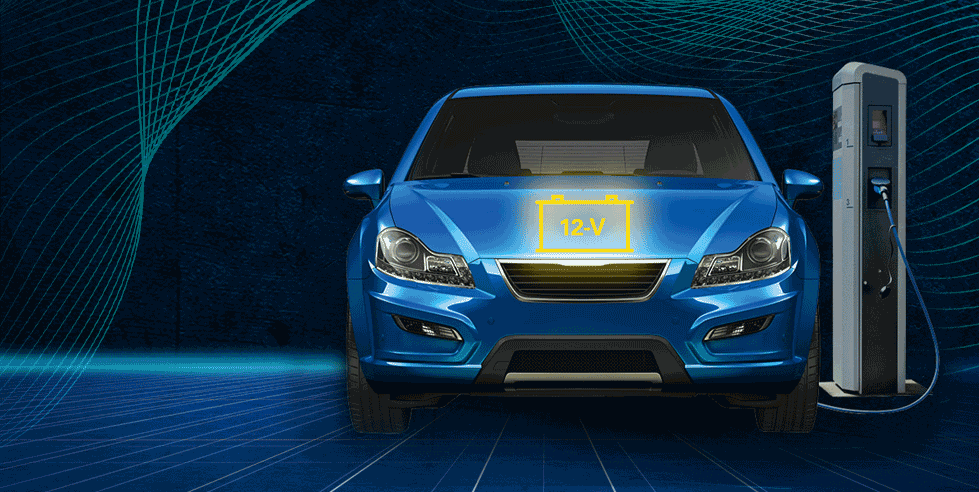
Even fully electric vehicles still rely on a 12V auxiliary battery because many essential safety, comfort and control systems require a stable low-voltage power supply. In addition to the high-voltage battery, all electric vehicles contain a 12V battery, which is increasingly becoming a crucial safety component in the vehicle.
Modern electric vehicles are evolving into software-defined systems with more than 50 electronic control units (ECUs) powered by the 12V battery. As electric vehicles grow and evolve, so do the electrical loads their battery must support to meet customer expectations for safety and connectivity.
Essential functions
• Interior lights
• Driver assistance systems
• Alarm system
• Radio and sound system
• Navigation system
• Instruments
• Door locking system
• On-board computer and controls
Crucial safety features
• Windscreen wipers
• Power steering
• Brakes and brake booster
xEV Battery Maintenance: What affects your car’s battery longevity and performance?
As the latest ADAC statistics show, approximately 46% of all car breakdowns are caused by batteries. Every day, drivers face a variety of factors that can stress the conventional batteries beyond their capabilities.
Factor 1: Long downtimes
The battery must supply energy even when the engine is switched off; this includes alarms, door locks, keyless-go functions and navigation systems.
Factor 2: Multiple short trips
Short journeys can put a lot of stress on car batteries. If the car isn't running for long, the battery doesn't get enough chance to recharge; that can compromise its longevity.
Factor 3: Extreme temperatures
Extreme temperatures can affect the performance of batteries and lead to starting issues. This is attributed to the slower electro-chemical reactions that occur in cold weather, which can strain the battery. Similarly, in hot weather, accelerated self-discharge or corrosion may occur, which can also contribute to battery problems.
Factor 4: Battery degradation
All batteries lose capacity over time due to chemical aging. In xEVs, this process is influenced by usage patterns, charging behavior, and environmental conditions, which can gradually reduce performance and efficiency.
Factor 5: Charging habits
Frequent fast charging or consistently charging to 100% can put additional strain on the battery. Balanced charging practices help maintain long-term battery health and performance.
Factor 6: Storage charge
Leaving a vehicle unused for long periods with a very low or very high charge level can negatively affect the battery condition. Maintaining a moderate charge level is recommended for longer downtime.
Factor 7: High electrical loads
Modern xEVs rely on numerous electronic systems. High demand from infotainment, driver assistance systems, and onboard electronics can increase stress on the 12V battery, especially during standby phases.
Factor 8: Thermal management
Efficient temperature regulation is essential for battery performance. Inadequate cooling or heating can accelerate wear and reduce the car’s battery lifespan, particularly in extreme climates.
Got a question?
-
A car battery lifespan is influenced by several factors, including temperature, charging habits, driving patterns, and downtime. Frequent short trips, extreme weather conditions, and improper charging can accelerate wear and reduce overall performance over time.
-
Cold temperatures slow down the chemical reactions inside the battery, which can reduce range, limit charging speed, and increase energy consumption. This can also place additional strain on both the high-voltage and 12V battery systems.
-
Frequent use of DC fast charging can increase battery stress and contribute to faster degradation over time. Occasional use is not a problem, but regular fast charging should be balanced with slower charging methods when possible.
-
Most electric vehicle batteries are designed to last between 8 to 15 years or around 150,000 to 300,000 kilometers, depending on usage, maintenance, and environmental conditions. Many manufacturers also provide long-term warranties for added reassurance.
-
Even in fully electric vehicles, the 12V battery plays a critical role. It powers essential systems such as safety features, control units, and onboard electronics, ensuring the vehicle can operate reliably even when the high-voltage system is inactive.